#ContactForm1 { display: none ! important; }

Thursday, February 25, 2016

On Being Responsible Killers - a guest post by Jane Lebak

Writers are no strangers to death. Neither are our characters. It hurts, but sometimes we have to kill one of them.

https://twitter.com/LianaBrooks/status/620705651052773376?ref_src=twsrc%5Etfw

Back during my college days, while drifting to sleep, I thought about how the Bible says humans are made in the image of God, and then I thought about how each us us to some extent reverse engineers what God might be like based on what we’re like.

(This is what happens when you double-major in English and Religious Studies. I mean, in addition to having all those high-paying jobs laid out at your feet.)

So with a total arrogance typical for me back when I was a college student, I modified Jesus’s question: “Who would my characters say that I am?”

Ooh, that was fun. I imagined a court room and put my favorite characters on the witness stand. Each one testified under oath as to my personality and values. I kept them in character, but I had them make their judgments based on how their own stories had unfolded. And not just my recent characters: I went back to characters I’d written when I was twelve and thirteen.

The character from my high fantasy testified that I was ruthless and valued success. Another
character said I was a loner who valued community, but didn’t fit into it. A third character said I set tests and expected you to learn from your trials.

Then a minor character from a fanfic took the stand. I hadn’t thought of him for ages, not since I’d written the story where he’d appeared.

He trembled with anger. “Jane doesn’t care. She created me only to use me, have my life benefit someone else, and then leave me destroyed.”

So much for drifting off to sleep.

I wanted to hug him and hold him and tell him it wasn’t true; I wanted to reassure him that I cared about my characters — except he was right. That was exactly what I had done to him. He suffered, and that had been his only purpose. He was expendable.

I wanted to defend myself, and honestly, I couldn’t.

I lay awake when I should have been sleeping, analyzing the way I used characters in stories. I’d invented the “Red-shirt” without yet knowing what one was. My little guy was right.

The more I thought about it, the more my character’s accusation changed the way I write. I lowered my overall body count. I’ve made sure that even if a character has to die, he gets a fair shake all along; he gets a personality; he gets a purpose; at the very least, he has a chance.

Stories being what they are, sometimes characters have to die, but as writers and as readers, we need to handle it the right way. The death of a character isn’t a ploy for easy emotion. When a character dies, it needs to be a fulfillment so while we as readers may feel sad, there’s also a certain rightness to it. It’s an end, but it’s an end the character himself or herself might have endorsed. “I died doing what I wanted to do.” Or better yet, “I died being who I truly am.” Not that their life was taken, but that they gave it. And in doing so, gave life to someone else in the book and in some ways gave life to the reader.

It’s a testimony to good writing that these characters mean so much. But to mean so much to the reader, they need to mean much to the writer, and that means treating their lives – and their potential deaths – with respect.


Jane Lebak talks to angels, cats, and her kids. Only the angels listen to her, but the kids talk back. She lives in the Swamp, writing books and knitting socks, with the occasional foray into violin-playing. You’ll also find her blogging at QueryTracker.net, a resource for writers seeking agents and small publishers

Wednesday, February 24, 2016

Maslow vs The Deadline

In 1954 Abraham Maslow introduced his theory of the Hierarchy of Needs. More than anything, people needed their basic physical needs met (food, water, shelter, and sleep). After that came security needs (financial stability, safe shelter, health). Then came Love and belonging (emotional needs and relationships), then esteem (confidence, self-esteem, praise), and only after all those other needs were met could a person move to a place of creative, morale, non-prejudiced living.
An illustration of Maslow's Hierarchy of needs provided by Simply Psychology.

The Hierarchy of Needs is often drawn as a pyramid, suggesting that without the solid base of food, water, shelter, and the next level of health and security an individual can't progress. Without food and water there can be no concern for emotional health and well-being. Leave someone to get hungry and see how fast they get cranky and impolite. That's Maslow's Theory in action.

On a deadline for any creative project Maslow's Hierarchy of Needs becomes something of a sticking point, because creativity only exists in a place or mind where all other needs are met.

There are lots of authors who talk about how much writing they can get done, or how to write 5000 or 10000 words in a day. There are always people who will tell you about how to get the maximum output from your writing time. And they all assume the basic needs described by Maslow are met.

This is a bad assumption.

One of the biggest stumbling blocks for any author is actually the Hierarchy of Needs. It's the main cause of writer's block.

Sit down with an author who hasn't written in two months and they'll tell you how hard the words are, that they just can't get things right, that they have no ideas... Then ask them about the rest of your life and nine times out of ten you'll hear about a job loss or financial setback, health problems, family problems, work problems, or some other hiccup that has unbalanced their pyramid.

More than one author has quit writing in despair because they thought they had failed at being a writer simply because there was some underlying need that isn't being fulfilled. So, instead of giving up in despair, when you hit a day where the words aren't working ask yourself: Are my needs being met?

Are you hungry or thirsty? Have you had enough sleep? Are you healthy? Is your situation stable? Are you in emotional turmoil or in need of some emotional support? Are your basic needs being met?

They may not be. And, I'll be perfectly honest, financial stability and perfect health aren't always going to be options. There will be days when your self-esteem is bruised, health problems are acting up, and the roof springs a leak. The secret to hitting your deadlines in the chaos is to recognize your needs, and meet as many of them as you can.

If you can't guarantee financial stability, that's fine. Acknowledge that the matter is out of your hands until the situation changes/company finishes lay-offs/hiring process is over/parents send you allowance. Then, get back to writing.

If your health isn't 100%, do what you can, accept the limitations where you need to, and write as you are able.

If you're emotionally distressed, do what it takes to make you happy again. Cry if you need to. Call a friend for a good laugh. Vent in an email. Spend six hours on Tumblr looking at kitten pictures. And then wipe away the tears, turn off the kitten Vine, and get back to writing.

Remember: it is okay to have bad days. It is human to fall short of your goals. It is natural to adapt your goals and deadlines to the challenges of reality.

None of us has a perfect life. Everyone will face challenges, bad days, and frustrations. What matters is getting back up again after life smacks you down. Don't sit there in the mud being miserable. Get up, change course, adapt to the challenge, and get moving again. It's the only way to survive.

And keep writing. The world needs your book.


Tuesday, February 23, 2016

Impulse Buy of the Week: UNCLEAR SKIES by Jason LaPier


Rogue cop Stanford Runstom blew open a botched murder case and was given a promotion – of sorts. But doing PR work for ModPol, the security-firm-for-hire, is not the detective position Runstom had in mind, particularly when his orders become questionable.

Despite being cleared of false murder charges, Jax is still a fugitive from justice. When ModPol catches up with him, keeping his freedom now means staying alive at any cost, even if that means joining Space Waste, the notorious criminal gang.

When ModPol and Space Waste go head to head, old friends Runstom and Jax find themselves caught between two bloodthirsty armies, and this time they might not escape with their lives.

Unclear Skies is the second book in The Dome Trilogy, following Unexpected Rain. The digital release is February 25th, 2016, to be followed by a paperback release in August.

Ebook for $2.99/£1.99


Born and raised in upstate New York, Jason now lives in Portland, Oregon with his wife and their long-haired dachshund. In past lives he has been a guitar player for a metal band, a drum-n-bass DJ, a record store owner, a game developer, and an IT consultant. These days he divides his time between writing fiction and developing software, and doing Oregonian things like gardening, hiking, and drinking microbrew. He can be found on Twitter @JasonWLaPier and his blog at http://jasonwlapier.com

Friday, February 19, 2016

Taking The Weekend Off

Despite my best efforts to control time and keep the world just the way I like it, sometimes tragedy
strikes. This weekend I'm going to the funeral of a friend who died suddenly. It was senseless, random, and probably something that couldn't have been prevented.

There is no drunk driver or illness to blame, only an empty space at the table, an empty office at work, and a sense of loss that is impossible to shake.

I'm taking the weekend off from writing and probably from most online activity so I can spend the time mourning the loss of a friend, and appreciating the time I have with those who are still alive.

Take care of yourselves. Be careful this weekend. I'll see you all again bright and early Monday morning.

<3
- Liana

Wednesday, February 17, 2016

Well, This Is Awkward

Have you read CONVERGENCE POINT? Good... so has my eldest daughter. She's 13 and now I'm running into a whole new world of crazy with writing.

I know my kids aren't going to have normal views on publishing. My younger two have never been alive when Mommy wasn't a published author. SEVENTY came out a few months before Bug appeared on the scene, and for most of my youngest's life I've been working on the story of Sam Rose.

But I never let my kids read my books.

They aren't kids books. They aren't written for toddlers. There's no pictures. And, really, I never figured my kids would be all that interested in Dr. Charm and Co. My kids are as unromantic as their mother, and I'm okay with that.

But last fall Eldest was out of books to read and she decided to raid my ARC shelf. I have a bunch of advanced copies and autographed copies proudly displayed in my living room. Most are several years old and you've probably read them (but I did get an early copy of STAKED by Kevin Hearne this year which made me ridiculously happy). They were all parent-approved, so I let my kid read through the OF TRITON/Syrena Legacy series by Anna Banks. The works of Shannon Hale and Ally Carter were dispatched with. The entire MAZE RUNNER series was devoured over a weekend when my eldest child vanished and then reappeared giggling maniacally.

And then Eldest held up THE DAY BEFORE. "Mom, can I read this?"

There was one scene I told her not to read (the one with the sand dreams and lace undies), and I let her have the book. I figured it wouldn't interest her too much. Sam and Mac are older, they're pretty dull when compared to the Gladers and mermaids, and I know it doesn't have enough action scenes to have entertained a 13-year-old Liana.

Eldest read it over the course of the week, wrote a report on it (which was another awkward experience), and that seemed to be the end of the matter.

Until CONVERGENCE POINT came out. The early copies showed up at my house at the end of December and Eldest appeared like a starving vulture. "Is this book two?"

"Yes..." Before I could offer any warnings she vanished with my newest novel. And returned to yell at me.

"Mom! Why didn't they do this? Why didn't Sam to XYZ?!?!?!"

It's like the review section of Goodreads was invited to the dinner table!

And it gets worse.

I'm currently working on the first draft of DECOHERENCE (due out September 13th), and Eldest has been sneaking in. I'm writing key scenes and then notice the sounds of a teenager trying to hold her breath. I turn, and lo and behold, there is my child. Reading over my shoulder as I type, eyes wide, hand over her mouth as if she's just trying to hold back and tell me what not to write.

I thought having a friend across town reading the books was bad. She's a non-writer, but a heavy Ma'am (Mac and Sam) shipper. While I was working on CONVERGENCE POINT she threatened to kidnap my kids (or, you know, babysit them for a weekend) if I'd just tell her if her ship survived.

... she still throws shade every time she remembers how CONVERGENCE POINT ended.

And now she's got my kid doing it too!

I'm surrounded! I'm going to need to start writing in a bunker with the wifi turned off and the curtains closed if I want to keep the ending a secret!

But, between you, me, and the squirrel taking notes from the back patio... I kind of love being able to share my books with my daughter. It's fun when you can introduce people you love to the imaginary friends who take up so much of your day. She may find out the ending before my editor, but this is fun, and I look forward to when my other kids are old enough to read my books.

And I hope you get the chance to share your stories with someone you love one day. It's worth it.

Tuesday, February 16, 2016

Impulse Buy Book of the Week: FORTUNE'S FOE by Michele Stegman

Historical romance set in 1740. In the midst of a raging war, Mariette Fortune is torn between saving the life of her brother or the enemy Spaniard she has come to love.

Mariette Fortune knows her brother will die if she doesn’t rescue him–especially if the Spanish discover they hold captive the son of the infamous privateer, Sean Fortune. But she didn’t count on fallin in love with the man whose life depends on keeping the English prisoners from escaping. Now she has to choose between them.

Alejandro de Silva knows there is more to the lovely Mestiza woman he has hired to keep his house…more than she will admit. Regardless, he cannot help that he is falling in love with her. But he never dreams she is an English spy and that her presence in Spanish St. Augustine will put both their lives in deadly peril.

$2.99


Michele Stegman has loved history all her life.  When she was studying history in graduate school, one of her professors quipped that she put too much romance in her research papers.  She decided to put in more romance and write historical romances.

Her Fortune series is following the adventures of the Fortune family through piracy and war in the 1700’s.

Monday, February 15, 2016

Apparently, Writing Books Is Hard

Saturday night I sent a lament to my crit-partner-in-crime whining about how very, very hard it was to write this book. I was frustrated, and stuck, and questioning every choice I'd ever made. All I wanted was some soothing reassurance that I could actually write a book.

This is what I got in return:

Do I need to pull out the almost-verbatim emails you sent me at this point in the Convergence Point draft? Breathe. This is a normal part of the process. It sucks, it hurts, and it threatens to pull you under, but you CAN do this, because you've done it before. Trust me. This is EXACTLY where you were at this point last time. 


Apparently I do this all the time.

I'm not the only one either. A Very Famous Author shared a similar anecdote where s/he'd written their agent a similar lament and received the reply, "Oh, so you're at that part of the book?"

Writing is hard. It doesn't get easier with time because every book is different. Every time you write something, it feels like the first time. It's stressful, cringe-worthy, and frustrating. You will seriously consider giving up writing to sell shoes. And that's okay.

Keep writing and eventually the book will be done.

Saturday, February 13, 2016

Happy Valentine's Day!

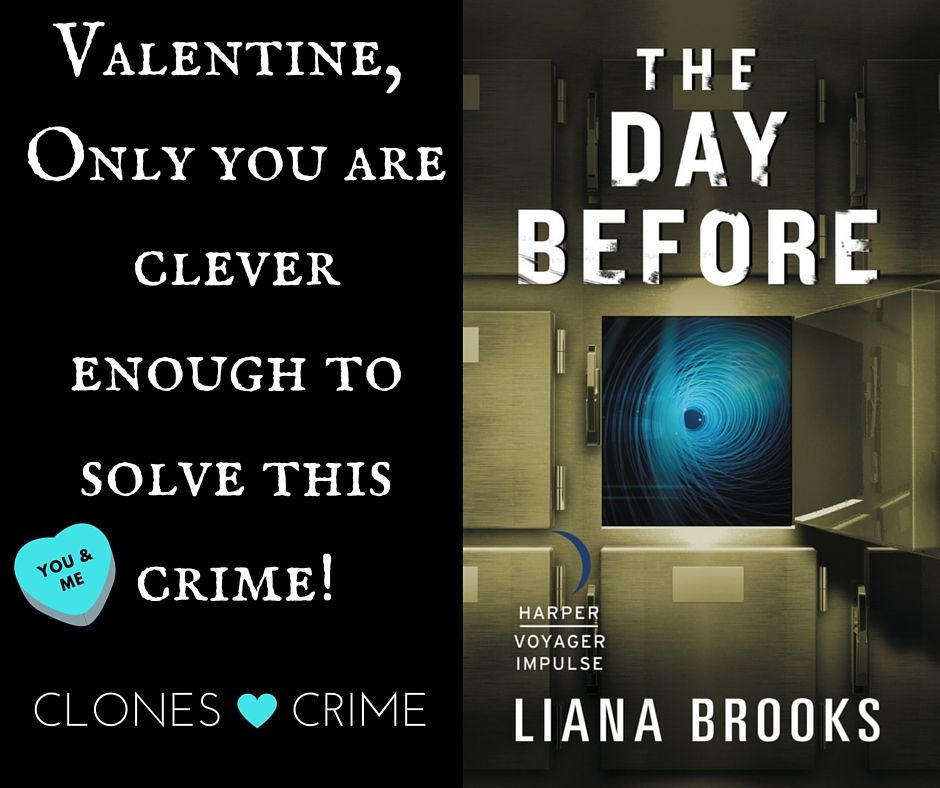
I made you some cards. Pick your favorite and tell me in the comments what you're reading this weekend. :)


Thursday, February 11, 2016

GOING ON A BEAR HUNT - a guest post by Misa Buckley

If you're a parent, you're probably familiar with Michael Rosen's fabulous children's story. Full of repetition, humour and lovely illustrations, it's a classic. It's also a great moral tale about tackling hardships.

Being an author is frequently hard. Some days the words seem stuck and you're sat facing a blank piece of paper or a blinking cursor, and you have no idea what to write. Procrastination lets you put the problem off for a little while, but eventually you have to face crossing the obstacle.

You can't go over it.

You can't go under it.

You have to go through it.

Sometimes it's as easy as walking through long grass. Other days, it's like stepping through mud. You slip and slide, your boots come off. You get so tired you're not sure you can take another step. But once you've started, you have to keep going, you have to get through to the other side.

It is there. Even if it seems far away. Keep going, keep fighting. Don't worry about what's coming out – the quality of your words matters less than the act of putting them down. Of getting past whatever obsacle has thrown itself in your way.

And, if you keep going, you'll find yourself back on solid ground. You'll be skipping along effortlessly, the words no longer troublesome but flowing like a river.

What a beautiful day!

But word bungs aren't the only thing that will trip you. Editing is hard. Submitting your work to agents takes confidence. Rejections will test your resolve.

The solution is the same – push through it. Being an author is about not giving up, ever. It's no easier once you're published, believe me, but the rewards are worth the trials and tribulations.

______________________________________

Misa Buckley grew up watching Doctor Who and Star Trek, so when she undertook NaNoWriMo in 2007, it seemed obvious to her to write science fiction. However, a teenage obsession with her sister’s Harlequin books meant she liked adding a little spice to her stories. This blend of genres continues to this day.

LINKS
Blog: https://misabuckley.wordpress.com/
Twitter: https://twitter.com/MisaBuckley
Amazon: http://smarturl.it/p0t5ql
Kobo: https://store.kobobooks.com/en-us/search?query=Misa%20Buckley&fcsearchfield=Author
AllRomance: https://www.allromanceebooks.com/storeSearch.html?searchBy=author&qString=Misa+Buckley

Wednesday, February 10, 2016

2015 Award's Eligibility Post

2015 was the first year I had novel-length works available. That means this is the first year I'm able to write an awards eligibility post. Both of the Time & Shadows books qualify for Hugo Award nominations this year. 

Best Novel
THE DAY BEFORE (April 2015/HarperVoyager)

CONVERGENCE POINT (November 2015/HarperVoyager)

Tuesday, February 9, 2016

Impulse Buy Book of the Week:

 Zanna is an elven warrior princess, who seems to have it all, yet really has nothing. Her fate is not in her own hands. Instead, it is bound to an ancient magic she has no control over.

She wants to rule the elves, yet must prove herself worthy before she is accepted. She also wants to find her mate, but after two thousand years, didn't hold much hope. Her existence has become mundane, and she craves something new. A routine assignment suddenly turns into something bigger that could ruin all of them. Is she strong enough to save the world and find her own happiness too? Can she change and help change the fate of the world with her?

Will is an orphan who has always been confused by his strangeness. He keeps himself apart, separate from those around him. A chance meeting with a remarkable woman changes everything. He not only learns about himself, but about a whole other world that he is a part of by birthright. However the father that abandoned him as an infant stands to ruin his future and the future of the world unless he can be stopped.

Will and Zanna must face loved ones who work against them and their past as well as find the strength to fight a bigger enemy and save the realms from evil. Can love, friendship, family, and acceptance defeat evil before it brings the realms crashing down? Can Zanna prove herself worthy to rule the kingdom?

$4.99


Sheri Velarde is an author, artist, independent comic creator and jewelry designer out of Albuquerque, New Mexico. She is a creative soul with eclectic taste and style when it comes to her art and writing. Sheri is a multi-publisher romance author who is now branching into fantasy as well with her Defender of the Realms series. When not creating (which her fiancé argues is never), Sheri can be found spending time with her husband and their two dogs, reading, watching fantasy movies, attending metal concerts and just taking time to stop and enjoy life.

You can view Sheri’s work on her: 

Monday, February 8, 2016

I Lost A Few Weeks There...

A gratuitous puppy pic to distract you from Monday.

At the beginning of the year I decided 15 sick days plus a few vacation days would be more than enough to account for my needs plus visiting family. And then I got hit by the plague. I'm not even sure what it was. It started as a cold, turned into a sinus infection, and then became some ethereal illness stalking my waking moments and robbing me of my voice.

Who knows, maybe I was cursed by a Disney villain while I slept. The end result was several days of fever-dreams, no voice for the past week (which makes parenting and phone calls super fun), and eight of my fifteen sick days eaten up while I slept on the couch and the 4yo tried to feed me pretzels.

I'm behind on absolutely everything. Which means that later this week I'm crawling into my writing cave and trying to make up for lost time. The first draft of DECOHERENCE is due to my agent on March 9th, and to my editor May 2nd. So I'm pulling a NaNo in February to catch up. No big deal! I've done this before and didn't die!

Here, have another puppy picture to tide you over...

The normal face of a napping mastiff puppy. 

Thursday, February 4, 2016

MeanKitty Interviews Liana Brooks

A week or so ago I said I was looking for guest bloggers, and one daring soul piped up and asked if I wanted to be interviewed by her cat. I didn't see a reason to say no, so here it is, my interview with Meankitty, the star of www.jodywallace.com. I'm sure Jody doesn't mind sharing the spotlight. 

Meankitty Wants To Know...
1) Why did you decide to be a writer instead of a cat sanctuary owner?
Hmmm.... good question. I think it’s because I had four cats in high school and wanted to try something else. Also, bad books do not poo on my bed or pee in my shoes when angry.


2) Why do you think cats are better than Mastiff puppies and beta fish?
(Since you call yourself a writer, I trust your answer will be eloquent.)
Oh, dear, let’s see.... Cats are much better at being felines, they travel better than mastiffs or fish (especially on airplanes), and they are excellent at eating mice. Mastiffs only step on mice and then leave you mouse pancakes to pick up. Meankitty should consider getting a mastiff for a chef. They make excellent mouse pancakes.

3) Why is your household currently deprived of a cat?

Sadly, most cats would fit into the mouth of our mastiff, and the puppy hasn’t yet learned how strong she is. Also, the position of Diva And Tyrant is filled by our four-year-old, Tyranna Regina, who believes she owns the universe and all things therein. A cat would only be competition, and the four-year-old bites competition for attention.


4) Tell me about the felines in your fiction. How often do they appear and
how big a part do they play in your narratives? Are any of your VILLAINS cat
owners, because they should be.
None of my villains are cat owners, they are minion owners because pets require too much selfless love for villains. However, you will be pleased to know that I have a series where cats are the heroes. Several of the heroes are tigers, but at least one of them is a common tabby cat, his name is Baldric and he is very good at research. There are currently four books planned in that series, which I hope will appease the Meankitty fandom.

5) On the off-chance you have yet to incorporate cats into your fiction,
when or how do you plan to rectify this egregious error and demonstration of
poor writing skills?
The first book in the Cat series is due out in 2018, if the stars align properly.


6) What are your favorite works of fiction or cinema involving cats or
favorite fictional cats?
I love THE CAT WHO TALKS TO GHOSTs, because who wouldn’t love a crime solving cat? But my favorite fictional cats are the twenty-some cats the witch Morwen lives with in the the Enchanted Forest Chronicles. Not only are those cats sassy, and able to turn a rabbit into a flying blue donkey, but they also have healing powers. They’re quite lovely cats.


7) Do you have any amazing, or at least humorous, real life cat stories
you'd like to share? Barring cat stories, you may share stories about your
Mastiff puppy embarrassing itself if you like.
My first cat was a black stray named Javiera, who wandered through my open bedroom window and had kittens on my parents bed when I was a toddler. Although the kittens were rehomed, Javiera and her friend Fluffy (a Persian) lived out the rest of their lives with me.
My favorite kitten though was Paisley, a calico manx. She was the result of an unwanted pregnancy (spay and neuter your pets!), and the person who had her planned to feed the kitten to the snake. I asked to play with Paisley, stuck her in my coat pocket, and told the woman that the kitten had run into the shrubs. Then I smuggled her upstairs to my bedroom and wouldn’t let her out for a week. I’m happy to say my mother let me keep Paisley, and she’s still living with my mom today (I wasn’t allowed to take her to college and Old Lady Cats do not like infants).

I do have funny puppy stories, but it’s mostly about mastiffs running and not being able to stop before they hit – and break – the fence.

8) How do your puppy and your fish get along?
Spike, the beta fish, tolerates everyone but loves only Tyranna Regina – the resident Diva and the keeper of his fish food. The mastiff puppy was told not to drink Spike’s water, and has since forgotten that Spike exists. Mastiff puppies do not have good memories.


9) What does your dog do to interfere with your writing?
Sometimes the puppy demands to be written into my stories. Puppy is our third mastiff, and the youngest one we’ve ever owned (the others were rescue dogs and older). Sadly, our Big Dog died suddenly this summer and there was a Dog-shaped hole in our lives. That sadness resulted in a scene in one of my books. Puppy’s arrival is also documented in the form of Bosco.


10) If you were going to write a paranormal or SF book about cats (assuming
you haven't already), would it be romance, mystery, thriller, or what? And
where would dogs and fish play a role in your fascinating, wonderful cat
world?

As I said, I am writing a series with cats as protagonists. It is a science-fiction book with romantic elements, and lots of gene engineering.

My favorite cat in that series is Ice, an 800-pound white tiger with a bad temper and killer blue eyes. He is friends with a fish (a shark to be precise) named Maggie, and winds up owning favors to a dog named Wolf (because I was bad at naming things that day). They go on adventures, save the universe a few times, and blow up way more than the budget allows for. They get yelled at.... Ice snarls, Maggie smiles, and Wolf sneakily does things in undisclosed locations.

Ice also knows a human child who he sometimes babysits, and one time he let her ride to school on his back because she was running later. Arriving to school riding a tiger makes an impression on the other kids at school. She was a lot more popular after that. But so is anyone who has cats who love them. J


Jody Wallace grew up in the South in a very rural area. She went to school a long time and ended up with a Master’s Degree in Creative Writing. Her resume includes college English instructor, technical documents editor, market analyst, web designer, and general all around pain in the butt.

She currently lives in Tennessee with her family: 1 husband, 2 kids, 2 cats. One of her many alter egos is “The Grammar Wench”, which should give you an indication of her character. She is a terrible packrat and likes to amass vintage clothing, books, Asian-inspired kitchenware, gnomes, yarn, and other items that threaten to force her family out of the house. She also likes cats. A lot.

Wednesday, February 3, 2016

What if my idea is like someone else's?

Hi Liana,

I am not sure what to do when I have an idea and it is really, really similar to other books I have read. I don’t know how if it would be ok to actually publish a book like that (not that I am even close to finishing it yet). I know that some books are like that, but my ideas are really close to other books. Would it be ok to have a book similar to another book?

- A Young Author

~ ~ ~ ~ ~ ~ ~ ~ ~

Dear Young Author,

   The not-so-well-kept secret of publishing is that all books are like other books. Harry Potter and Star Wars? Same story! Pride and Prejudice and Midsummer Nights Dream? Same story! We reuse the same plots and ideas time and again. The plucky young farm lad with a destiny he never guessed has been the framework of epic fantasy for centuries, if not longer.

   The difference between these books isn't the plot, it's the Voice of the author.

    Most writers start with fanfic or a variation of fanfic. They learn to write by retelling their favorite stories. Eventually, during the retelling, the story changes to something unique. The more you write, the more you pick up a unique cadence and style that becomes your Voice.

    Keep writing. Keep exploring new ideas. Keep trying new things.

   And don't stress about whether a book can be published until you have written it, edited it, polished it, and are ready to query agents or editors. Most stories won't make it past the Written and Edited stage of life. I average one in ten stories making it from Idea to Finished Manuscript. And only one of those ten survives editing to go on to be queried for publication. That's the nature of books. They don't all survive to publication.

   Sometimes the story isn't right. Sometimes you just lose passion for the project, and if you aren't willing to reread your book 100 times, you won't want to edit it. Don't be afraid to put a story down if it isn't working for you. There will be stories you can come back to, and others you'll wind up tearing up for parts. Stealing a character or a setting for a new book. That's fine.

   Storytelling is an art form. It is meant to change, to grow, to be destroyed, and to be reformed from the ashes.

   Keep writing. Find your Voice. Keep chasing the stories you love.

- Liana


Tuesday, February 2, 2016

Impulse Buy Book of the Week: HONEST AND FOR TRUE by Jane Lebak

29-year-old Lee has a Park Slope apartment with easy access to Manhattan, loves her job as an auto mechanic, and can see her guardian angel (a wisecracker with a fascination for the Rumours album.) That's kind of a full life for a kid in the world's biggest playground. Despite what everyone thinks, she doesn't need, or want, a romantic relationship.

Far more comfortable in blue jeans and flannel than in heels and satin, Lee finds herself lying to every man she dates. To the physical trainer, she's a preschool teacher; to the guy at the bowling alley, she's a secretary.

The lies keep romance at arm's length even as they drive the angel to distraction until the day she realizes she's fallen for a straight-laced accountant who's exploring his dark side through bizarre foods (please note: sea cucumber is not a vegetable). But now he thinks she's someone she's not.

Now she's got to turn those mechanic skills on herself to diagnose and repair the most important relationships in her life. And just think, she used to find it tough repairing a transmission!

$2.99


Long-time comedy writer and novelist Jane Lebak serves up a hilarious comedy with angels and spare tires and a recipe for the best omelets you've ever tasted. Also what may be the most romantic toilet-fixing scene in the English language. But there really isn't an award for that, so we'll never know.

Monday, February 1, 2016

Taking a Sick Day (forgive the typos)

Back at the start of January I decided that if I wanted writing to be a career I needed to make some changes to how I approached my writing time. I'd gotten into the habit of writing every free second, or rushing to my computer... and if I didn't hit my daily word count, or finish the chapter, or finish editing a section, I felt guilty.

Which isn't how "real" jobs work.

I've had office jobs before, they had set hours, and if things didn't get done in that time they got done the next day.

My husband never feels bad about not doing office work on a Saturday. He rarely sneaks back to office after dinner to finish One More Thing. So why was I letting writing control my life? To be perfectly honest, it happened because I never stopped to think about writing as a career.

I mean, I thought about sales and marketing and taxes. But, mentally, writing was still shelved with Art and Painting and Music... I was kind of treating it as a hobby, and still writing like a beginner.

One of the big things everyone pushes new authors to do is Write Daily. Which is great. A daily writing habit is often necessary if a new author wants to finish a book and never has. That's why NaNoWriMo is so wonderful. It's also not sustainable. No one writes seven days a week, not their whole life long, it's physically impossibly and emotionally draining.

I love to write. I find it very relaxing, and I enjoy the insanity that is publishing. But I know on the days I edit I'm not writing. On the days I'm sick (like today) I'm not writing. I don't have the mental energy needed to create a logical scene right now.

So, back in January, I decided I needed to calculate in time off, sick days, and no-guilt vacation days.

For writing to be a sustainable career I need to make sure I'm the one in control. I dictate the hours when I write. I dictate when I'm working. Not the other way around. Otherwise writing - or any other career - becomes a monster that steals your weekends and makes you fret during family dinner.

Writing every day is not as important in the long run as writing consistently. In 2015 I noticed I wrote in fits and starts. A few weeks of high output, and then weeks of nothing. That's not sustainable. That doesn't get books written or careers built. And I see this all the time with authors who quit before they get published. They get upset because they miss a day of writing, or they get off schedule because of an illness or project at work, and they are so angry with themselves they quit writing.

Or, after keeping up the daily writing schedule the author feels they don't have time for family and fun, so they quit writing.

Do you see a theme here?

Jobs have sick days. They have vacation days. They have a quitting time when you leave work. If writing - or any art - is your job, then make sure you schedule your sick days and vacation days. Figure out what's reasonable for you. Set your quitting time.

I'll be honest, the most productive year I had writing was the one where I turned off the computer at 4pm every day. I miss being able to do that. I'll make excuses all day long for why the 4pm shut-off doesn't work for me anymore (mostly because I need to be done at 2:30 and the smallest doesn't nap anymore... but that's another story), but it's the truth. Spending extra time in front of the computer doesn't make me more productive, it gives me more time to slack off.

So what's your action plan? Make a schedule, plan for days off, pick a quitting time, and write at a sustainable pace, not one that's going to kill you or your creativity.

Thursday, January 28, 2016

Writing By Hand by Katie Lynn Daniels - a guest post

I have always had a strange method of writing drafts. Since I'm a complete and utter panster, I always write the first draft without any clue what's going to happen, and then use that as a road map for my second draft. As a result, my second draft tends to be completely new material, not a rewrite at all. Once I figured out that I didn't actually rewrite my first draft and consigned myself to drafting twice, my ability to get stuff done increased a great deal. 

My first draft of Loki died at 53K, a little over half done. I used it to write an outline that is almost as long as my published novellas. And then I made a decision I sincerely hoped I wouldn't regret--I'm writing Loki 2.0 completely by hand. 

There were several reasons why I wanted to write by hand. When I first started writing I wrote that way exclusively. When I switched to typing, I found that my handwritten stuff was, as a better rule, better quality. The second reason I wanted to write by hand was because I started working at a daycare where I get quite a bit of reading time in during naptime. If my work was analogue, I theorized, I could take it with me to work, on the bus, etc. The downsides included deciding handwriting was too much work, and not writing anything at all. There was also the rather large issue of trying to type it all up at the end. 

Another writer who had written both his novels by hand gave me the very good advice of typing it up as I went along, rather than doing it all at once, and this has worked out really well. It's a great activity to engage in while procrastinating on the actual writing part of the book. 

Writing by hand forces you to stop and think about what you're going to say before you say it. When working off of an outline this results in a smoother draft that needs less rewriting than haphazardly slapping down whatever words come to mind. It also results in having a beautiful handwritten manuscript you can brag about to your friends forever after. It's probably not a system I'll use when finishing my Supervillain of the Day series, but for something as special as this novel is turning out to be, it was the right choice. Since starting it at the beginning of the month it is over 13,000 typed words, and 117 handwritten pages.

If one were to list the pros and cons of handwriting it would fill a volume, and ultimately result in a draw. For many people it's simply not practical. A lot of people can't read their own handwriting--I'm often one of them. But if you're feeling stuck in the rut with your draft or wish you could write to a change of scenery without dragging a laptop along, writing by hand may be an option worth considering. 

Twitter: @authorkatielynn
Facebook.com/authorkatielynn
Blog: vaguelycircular.com
Loki nove: loki.wpthunder.com

Wednesday, January 27, 2016

The Tiers (and Tears) of Publishing

This is the year you erase the phrase, "I'll never get published!" from your vocabulary.

Let's be honest: ANYONE CAN BE A PUBLISHED AUTHOR

It's not hard.

To publish a book you need a word document with something in it (words are good but really not necessary), a program for formatting a word document to an e-book (Calibre is free), cover art (any old picture will do really), and a place to sell the book (Amazon would like to take 70% of your profit so why not use them?)... Click. Click. Click. Load... and BOOM! You're a published author!

It's so easy, anyone could do it!

Doing it well is another matter.

And, for many authors, knowing how and where to publish their work is a major stumbling block on the road to success. Not all books thrive as self-published titles. Not all books will do well with a Big 5 publisher. If you know where I book belongs you'll have a much easier time publishing it, marketing it, and making money from it. And, let's be honest, all of us would like to pay the bills this month and if our beloved manuscript can add a few dollars to the Keep The Lights On fund, who's going to say no?

Here's a quick guide to help you determine where and how your book should be published:

Tier 1 - I Don't Want To Publish
... too many authors forget this an option. Sometimes you don't love a project enough to finish it. Sometimes you wrote the book because you needed to get an emotion out. No matter what anyone else says, remember that publishing is the choice of the author. If you don't want to see the book published: don't publish it.

A Word of Warning: If you really hate the manuscript I recommend destroying all copies of it. This prevents a fiasco like poor Harper Lee suffered last year with GO SET A WATCHMAN. She didn't want that book to see the light of day, and her lawyer wanted cash, while Ms. Less was in incapacitated in a nursing home the book was published with very dubious consent and it destroys the beloved character Atticus. Learn the lesson and don't leave bad manuscripts around.

Tier 2- Self-Publishing
... before you even consider this make sure you read THIS post on self-publishing and know you are ready to do this the right way. If you are ready to run a small business, not just write, than self-publishing might be the best path for you.

The books that flourish in the self-pub world are: series, romances, have likeable characters, fit a niche, and are published at short intervals.

Romance series do wonderful in the self-pub environment, especially if it's a niche that the other markets might consider over-saturated (vampires, werewolves, sexy cowboys). There are people who love those niches and they will pay good money for good books.

If you write picture books, mid-grade, most YA, or sci-fi you might want to consider another avenue. Those genres aren't making the jump to self-pub as easily.


Tier 3 - Small Press Publishing
... if you have a weird book, or a small book, or can't run your own business, or don't know how to hire an editor, or don't know anything about cover art this is a good place to look. There are pros and cons to small presses.
Pros: they accept shorter books and novellas, they live niche manuscripts, they love new authors, there's less competition, they'll provide an editor, they'll provide cover art, they'll give you decent royalties (usually 30-40%)

Cons: they aren't all good, they don't all have great editors, they don't always have marketing down to a science, they probably can't get you into cons, you probably won't get an advance payment

If your manuscript isn't novel-length, and you don't want to self-publish, you need to look at a small press. If your manuscript is novel-length you could also consider a big press. I like small presses, just be sure to do your research before you sign any contracts. Not every press is a good press.


Tier 4 - Big Press Publishing
... there are currently five major publishers in North America with a dozen imprints each and marketing money. Their editors have decades of experience, their cover art is determined by market analysis, and they can get you the visibility that will make you a bestseller. Or not. It depends on how much of the company budget is set aside for you. The lower your advance, the less marketing money you get, and the less advantages you have.

Big 5 looks a lot like Small Press with polish and influence. But it's harder to become a Big 5 author. Some imprints require an agent, some publishers host an open slush pile event a few times a year. So there are a few ways to get in, but staying in is another matter. Your writing needs to be consistent, and needs to sell well. Big Press is not forgiving of sluggish sales as small press, and no one is as forgiving as self-published because the only one who cares about sales there is you.

Consider Big Press is you have a really amazing manuscript, something original, or if you have something mainstream. There are niches at this tier, but every book published at this level is expected to have broad appeal. This isn't where books about local history are published, it's where the books about world history are published.

And, although this is considered Traditional Publishing, it's not the best place for everyone. Not every Big 5 book becomes a bestseller. Not every Big 5 author becomes a household name. This is just one way to publish. The advantages here are the marketing reach and the potential for an advance. For everything else, there's other ways to publish.

Monday, January 25, 2016

Acceptance, Patience, and Friendship

At twenty I thought I knew everything. My convictions were rock solid. I knew what was true and what wasn't and I would argue until the heat death of the universe with anyone who disagreed.

I remember one friend in particular who mentioned they didn't believe in evolution. My nostrils flared. The hair on the back of my neck stood up. "What on Earth? How can you not believe in evolution?" Clearly they were wrong and it was my mandate from the universe to bring them to the side of truth and science.

We never talked again after that night.

And it wasn't the last time I made that mistake.

After college there were other times like that, but they grew fewer and further apart. My convictions were just as strong, and often my views hadn't changed, but I was also working on not hurting people. Moving from intentionally doing no harm to intentionally doing good. There is a difference.

I'm over thirty now (I'm pretty sure there's a blog post about it)... and one of the things I happiest about is that I've been able to mature to the point where I can still hold on to my deeply held beliefs while also holding my tongue.

So an art major doesn't believe in evolution? So what. That's their choice.

So someone is an atheist? So what. That's their choice.

So my friend is bisexual and polyamorus while I'm hardcore demisexual* and monogamous? So what? My friend is not asking me to hop in bed with them, they're asking me to Facebook stalk someone who asked them out, and like a good friend I will. I will also threaten my friend's significant other(s) and tell them that if my friend cries I will make them pay (although I'll probably just trash talk them with a friend). And if my friend doesn't find true love this go-around I will be there with ice cream, action movies, and an ear to chew off. Because we're friends.

One of the hardest lessons in life - and one so very few people learn - is that you can respect someone without agreeing with them.

We have wars over the inability to accept that some people disagree with us. There are politicians in my country who want to ban people and label them because of their religious beliefs; or more accurately because the politicians don't agree with those religious beliefs. There are people who will let their convictions and beliefs or a few things override the most important belief: THAT ALL PEOPLE SHOULD BE TREATED WITH DIGNITY AND LOVE.

Everyone, no matter what their label, deserves love.

If changing the pronoun you use for a friend makes them feel safe, loved, and accepted - if it eases their burdens and depression - why wouldn't you change? You don't need to understand the why. All you need to know is how you can help them.

If accepting someone's religious beliefs means you can live side by side in peace, and let your children be friends, why wouldn't you let them practice their beliefs?

If someone has a different skin color, accent, or outlook in life... why can't you look to see the similarities? Why can't you look for the good? The only reason is because you wouldn't want to. And where does that leave you? Bitter. Alone. Friendless.

You don't need to make mistakes and bad choices to learn. I'm hoping some of you can learn from my mistakes and avoid them. Don't let a conflict of ideology or belief destroy a friendship. Don't ever let yourself become someone who hurts people... not in the name of God, not in the name of Science, not in the name of Patriotism.


*Demisexual and bisexual are probably not on the same plane or XYZ axis in the mathematics of gender and sexuality identity, but I'm demi leaning to ace and there's only one person I've ever found sexually attractive and I'm married to him. TMI? 

Thursday, January 21, 2016

ON WRITING MULTIPLE SERIES by Alex Bledsoe - a guest post

Book series abound, from the cookie-cutter Hardy Boys and Nancy Drew, to John Updike’s literary “Rabbit” novels.  In fantasy, especially, the trend is to multi-book tales, stories that mimic Tolkein in being too big for one volume.  And I, like several contemporary authors, juggle more than one series, unrelated to each other and requiring completely different creative approaches. That can be challenging.

The easiest ones to write are my Eddie LaCrosse novels and stories.  Eddie is what’s known as a “sword Jockey,” essentially a private eye in a secondary-world fantasy.  Everything is written in his voice, first person, so there’s never any worry about the point of view.  He’s sarcastic, tough, but with a fierce sense of right and wrong, and he carries the weight of his past.  Those elements are the ones that readers expect, and I have no problem giving it to them.

The challenge, then, is in changing the things that aren’t part of those expectations.  For example, in the first novel, THE SWORD EDGED BLONDE, the story jumps in time to show parallel adventures of Eddie as both a young man and as the more mature character he becomes in the rest of the series.  It also globe-hops to several different locales.  In contrast, the second novel, BURN ME DEADLY, is a linear tale, set in one location.  The third novel, DARK JENNY, is almost entirely flashback, a story told over a cold winter’s evening.  WAKE OF THE BLOODY ANGEL is a pirate story, with all the accouterments of that genre.  And HE DRANK, AND SAW THE SPIDER is filled with riffs from the works of Shakespeare, mashed up in new (and hopefully entertaining) ways.

My other series, the Tufa novels, is based around a specific place, and a group of people rather than an individual.  There’s generally an outsider who comes in and shakes things up, and of course music plays a major part.  Since the same characters recur, a supporting character in one novel might be the protagonist of the next.  What remains the same are the mystery of these Tufa people, their origins, behavior and ultimate destiny, which runs like a thread through the more immediate stories.  Ideally, this helps build the sense of community, both for the characters and the readers.

The one thing both my series have in common, and this is very important to me, is accessibility.  As a reader, I’m always frustrated when I find book 2 or 3 of a series that looks interesting, but can’t be comprehended unless you’ve read the series from the beginning.  I want readers to be able to jump into my series at any point, so I make certain that each story is a stand-alone.  There are threads that, if you’ve read the other books, will give extra resonance, but I want the overall experience to be complete, whether it’s book 1 or book 15.

Every author approaches a series differently, and we’re all motivated by both our writing and our reading.  Whether you’re telling one long story, or a bunch of individual linked stories, it’s important to give your readers both what they expect, and at the same time throw them something new every time.


Alex Bledsoe is the author of the Eddie LaCrosse novels (The Sword-Edged Blonde, Burn Me Deadly, Dark Jenny, Wake of the Bloody Angel and He Drank, and Saw the Spider), the novels of the Memphis vampires (Blood Groove and The Girls with Games of Blood) and the Tufa novels (The Hum and the Shiver, Wisp of a Thing and the forthcoming Long Black Curl).   If you want to keep up with him in real time, follow him on Twitter,  Facebook, and/or Google+.  His blog is updated at least once a week.